Quincy to Plymouth · answered 24/7
Chimney repair built for the weather that broke your chimney
The South Shore runs through 80 to 110 freeze–thaw cycles a year — among the hardest masonry climates in the country — and the coast adds salt on top of it. We repair crowns, mortar, liners and leaks so the next winter does not finish the job.
80–110
Freeze–thaw cycles a yearEvery crossing of 32°F expands trapped water by about 9% and widens the crack it is sitting in.
44″
Annual rainfall, and more on the coastWind-driven rain hits a chimney on all four sides at the most exposed point of the house.
3–5
Winters from crack to serious damageMasonry problems here are not deferred maintenance. They actively accelerate.
8–12
Years between repointing, on the coastInland South Shore chimneys often go 15–20. Salt air roughly halves it.
Every chimney repair, done properly
Nine things go wrong with chimneys around here. Each one has its own page explaining what it is, how it is diagnosed, what the repair involves and what it costs — because you should understand the work before you pay for it.
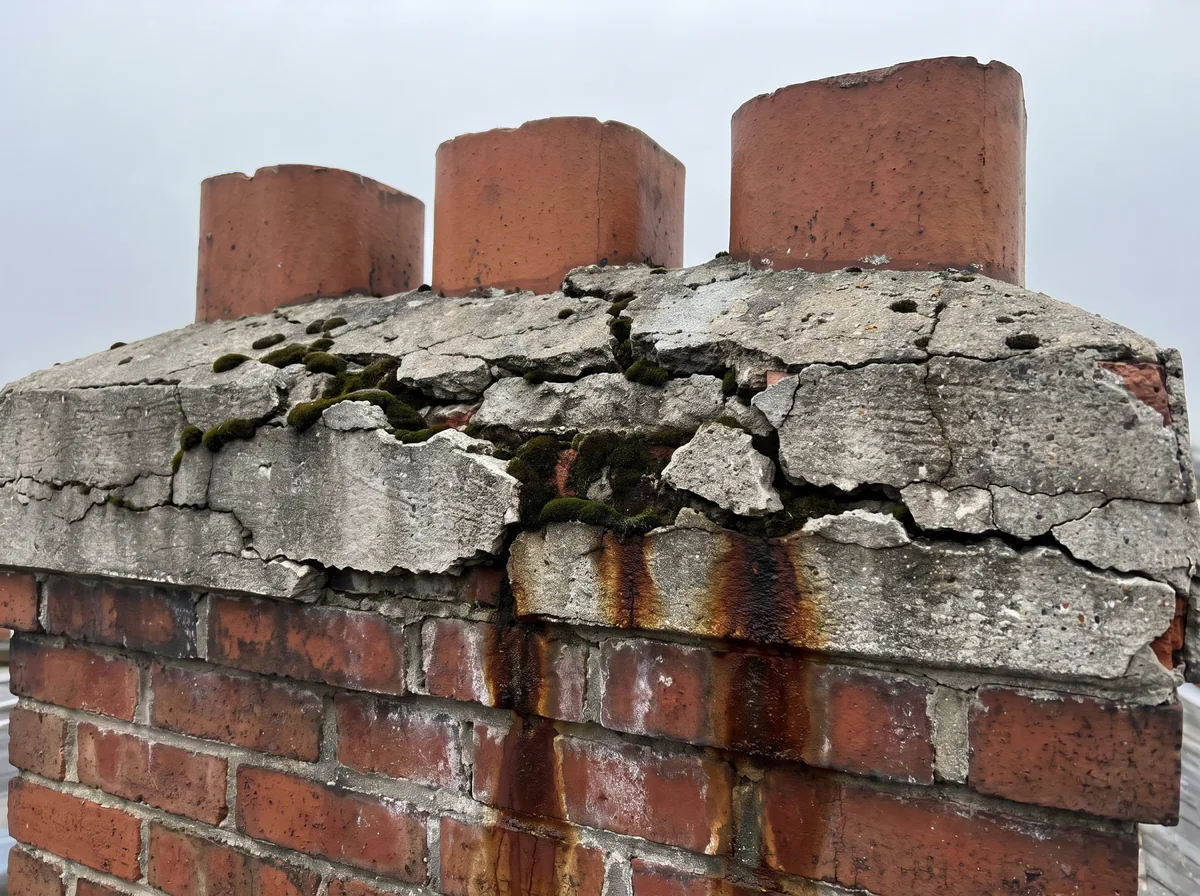
Chimney Crown Repair
The concrete slab on top is the first thing our winters destroy, and the first thing that lets water into the brick below.
What this involves →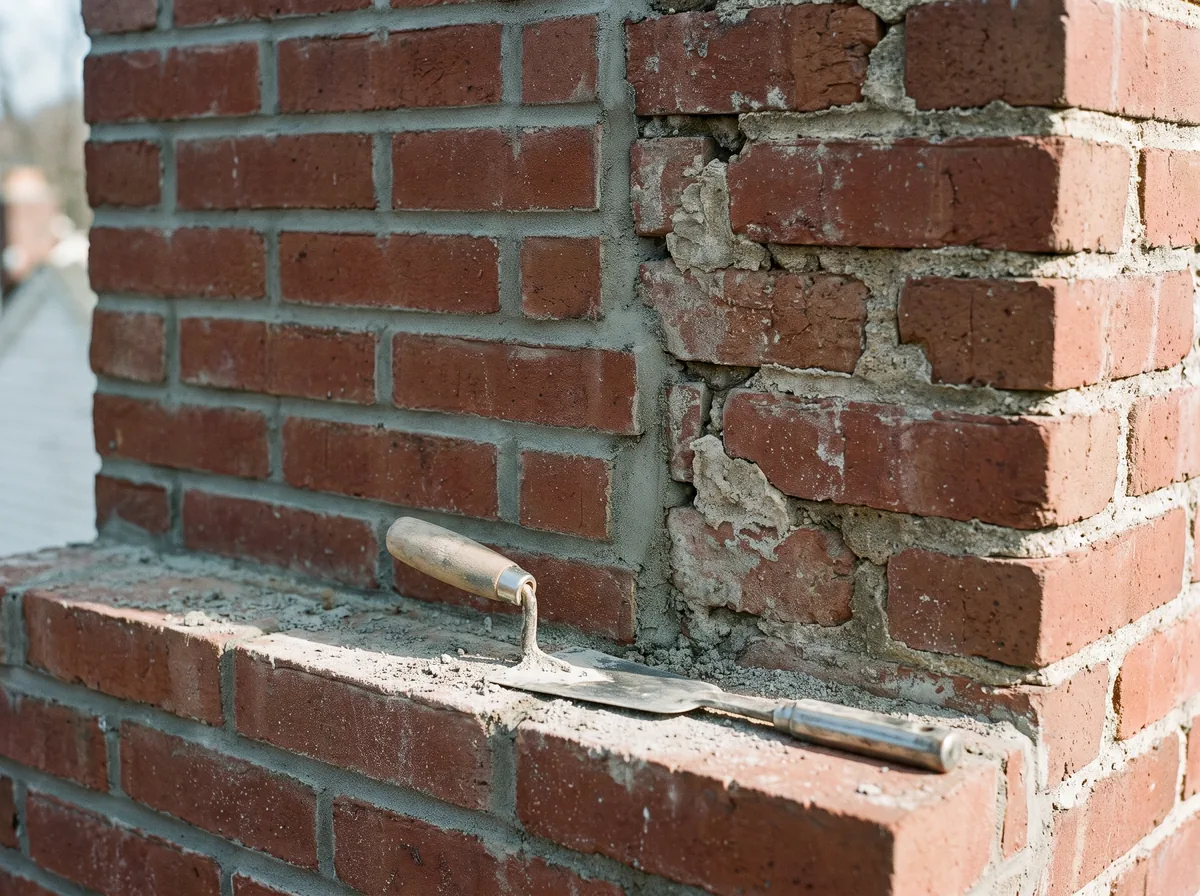
Repointing & Tuckpointing
Mortar is meant to fail before the brick does. When the joints go sandy, water goes straight into the chimney core.
What this involves →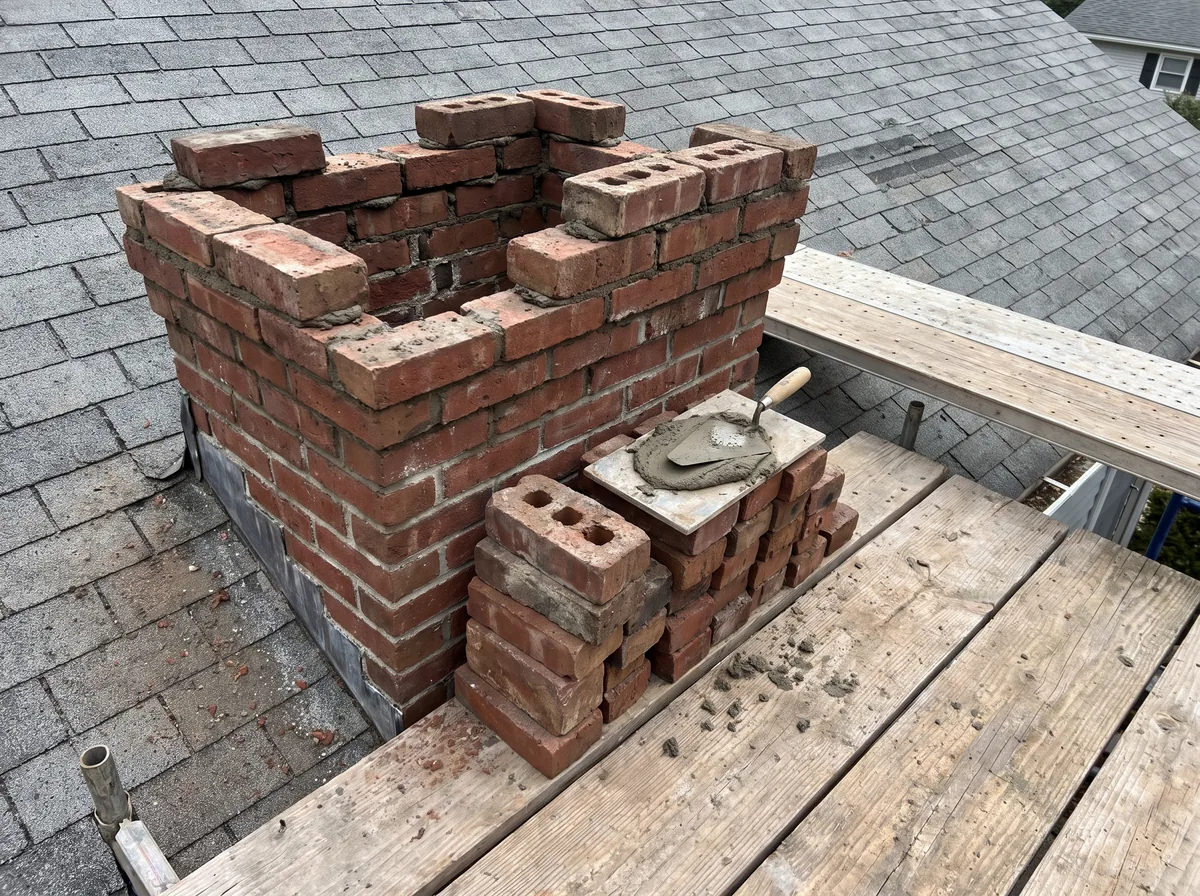
Chimney Rebuilding
When the brick faces have popped off and the stack is past patching, we rebuild from the roofline or from the footing.
What this involves →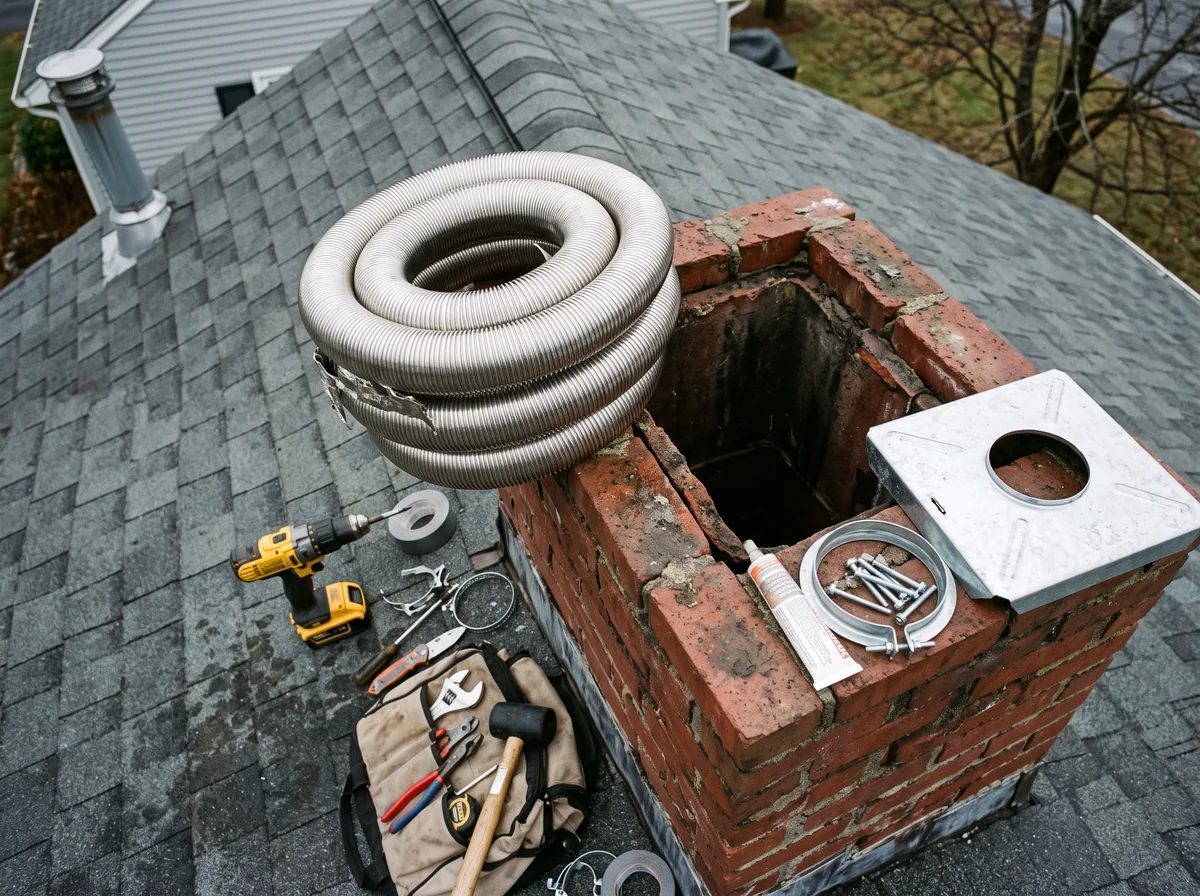
Liner Installation & Relining
Cracked clay tile, or an oil-era flue now venting a gas boiler — the most common serious defect we find on the South Shore.
What this involves →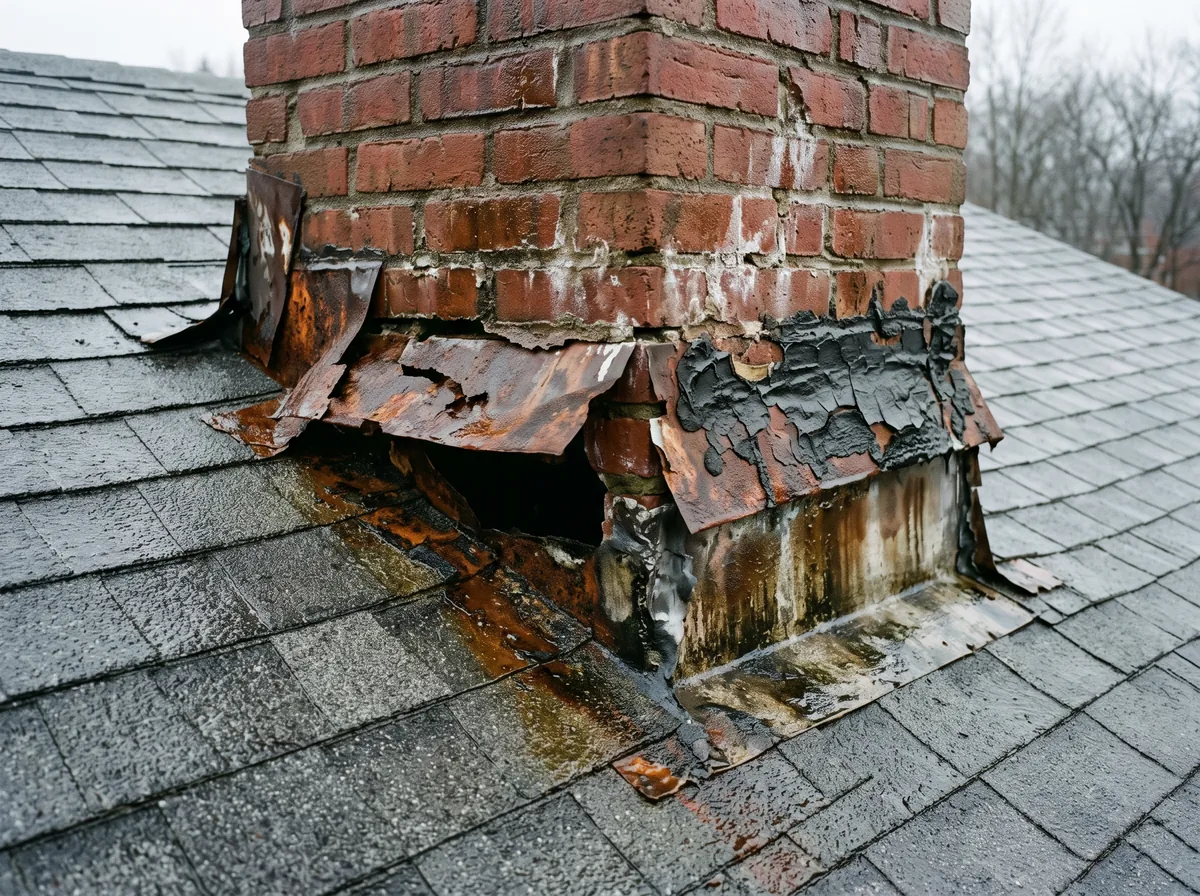
Chimney Leak & Flashing Repair
Water in the firebox or a stain on the ceiling. Five possible entry points, and guessing wrong is expensive.
What this involves →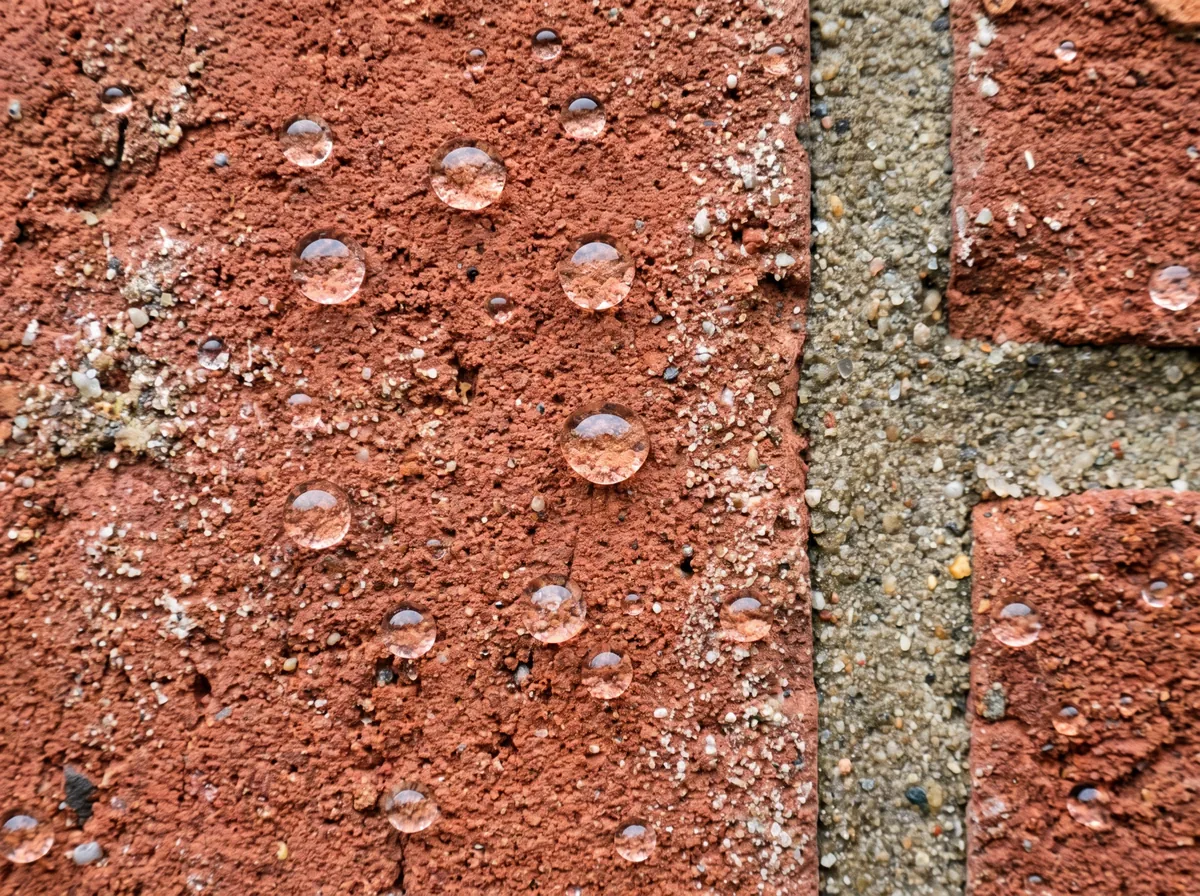
Chimney Waterproofing
A vapour-permeable repellent that stops wind-driven rain soaking into the masonry, without trapping moisture inside it.
What this involves →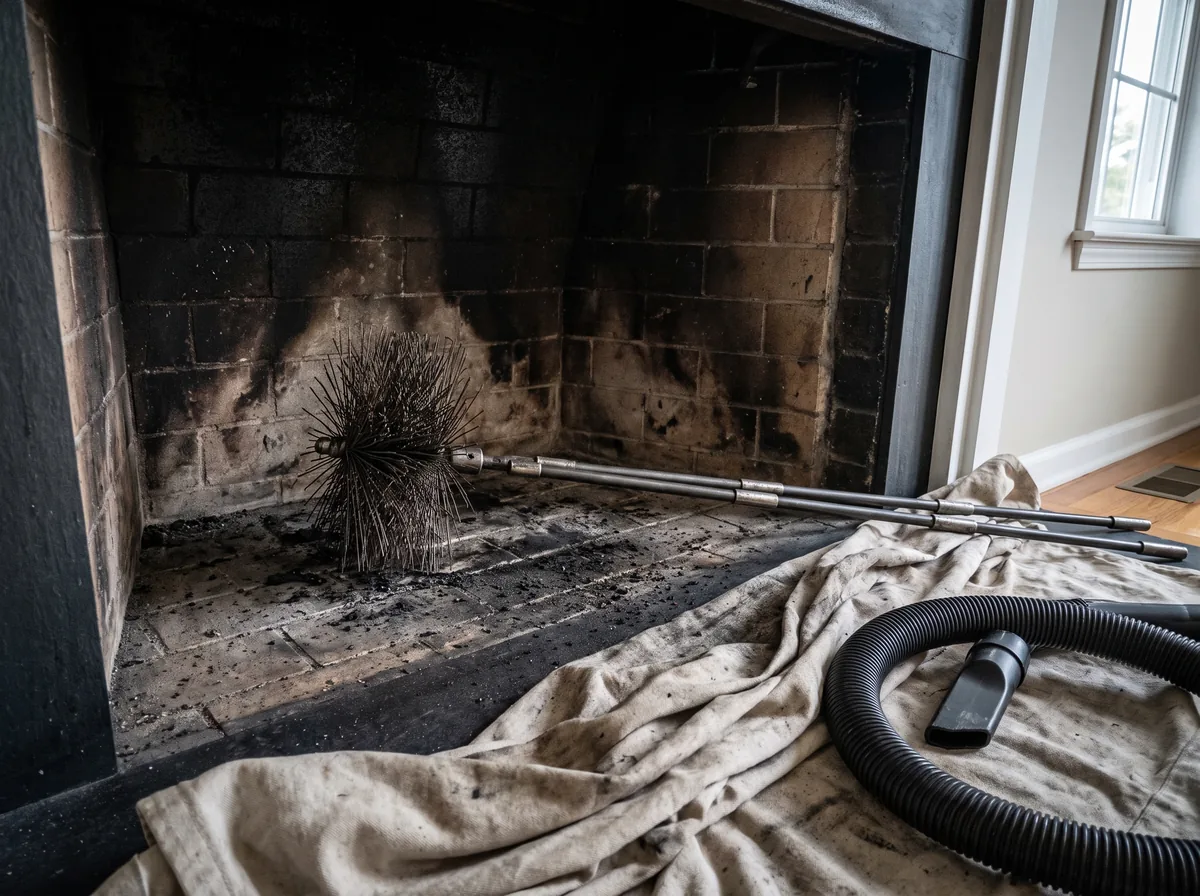
Chimney Sweeping
Creosote removal and a clean flue — plus an honest answer about what stage of buildup you actually have.
What this involves →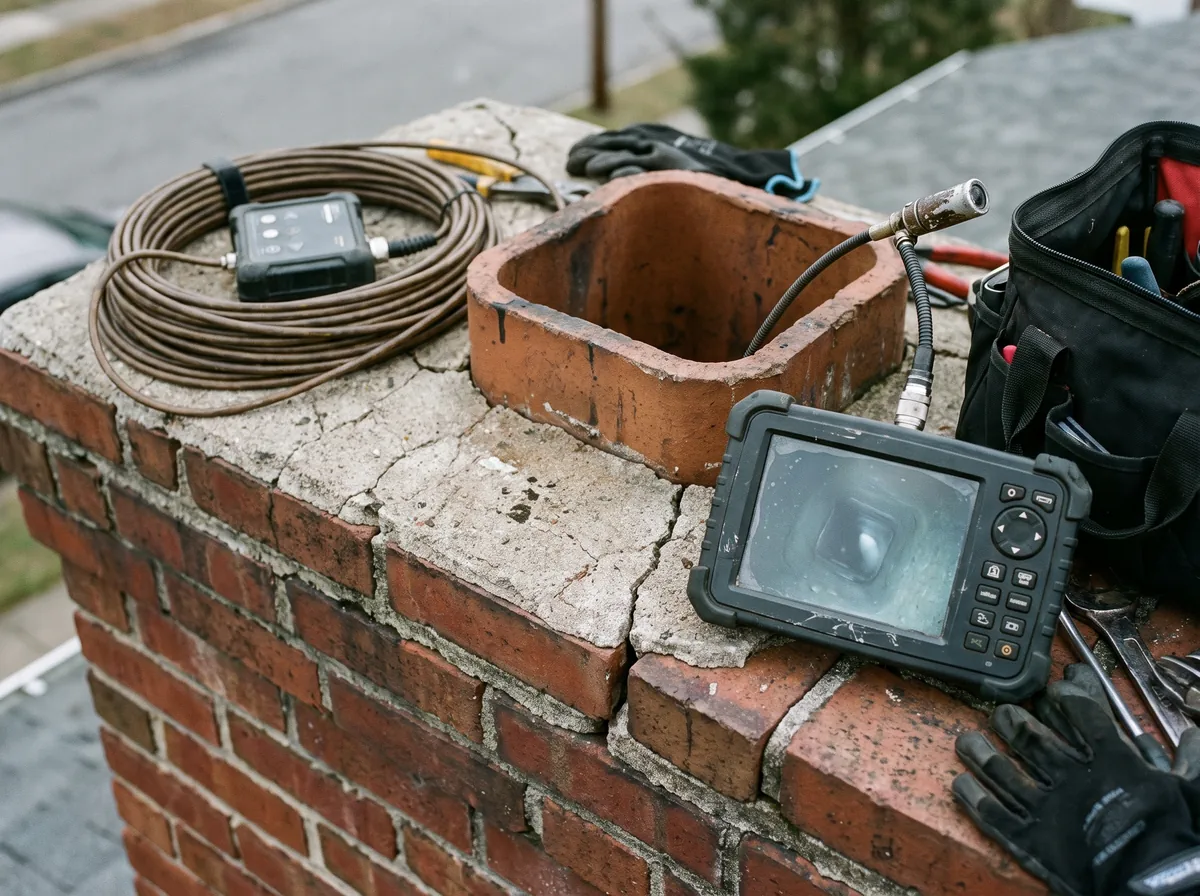
Chimney Inspection
Level 1, 2 and 3 inspections, including the camera scan buyers and insurers ask for.
What this involves →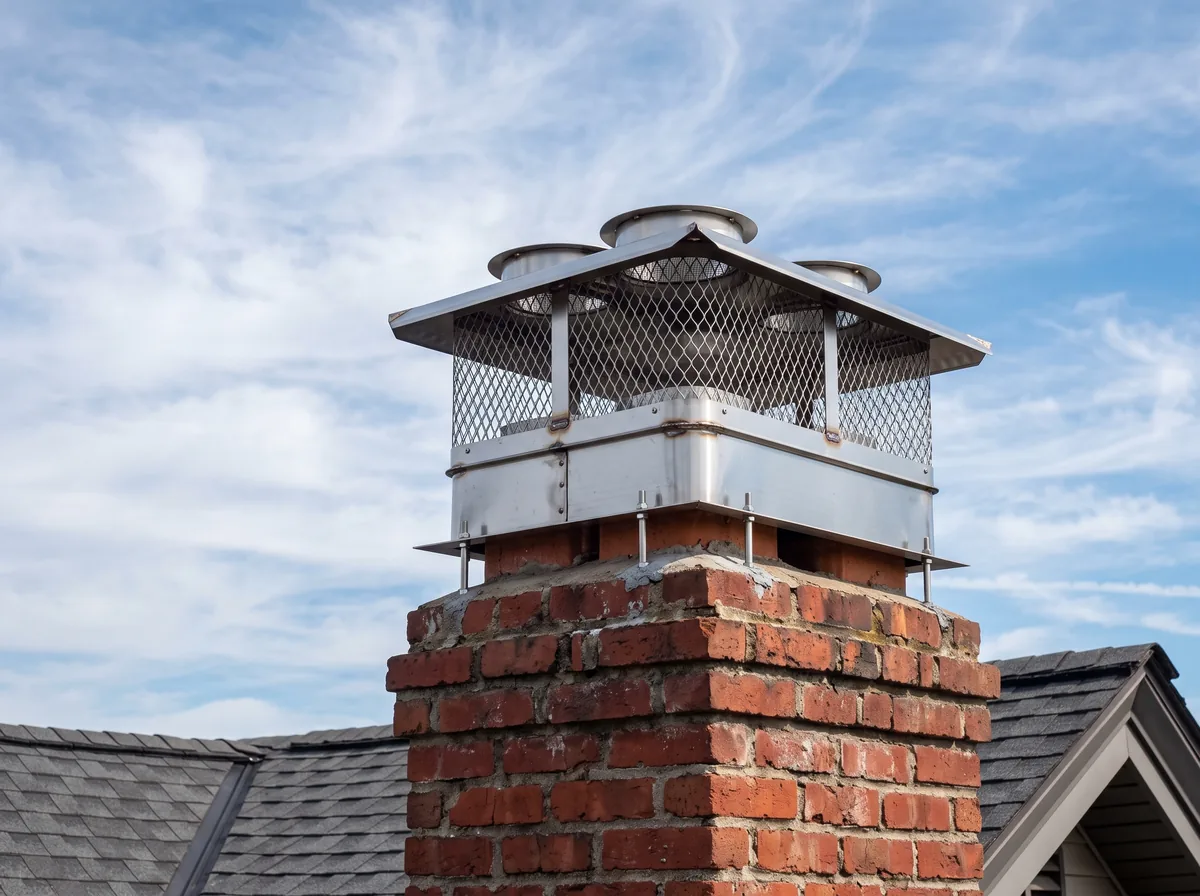
Caps & Dampers
Keep rain, snow and animals out of the flue, and stop heated air escaping up it all winter.
What this involves →Work out what you are actually looking at
Most chimney problems announce themselves somewhere other than the chimney — a stain on a bedroom ceiling, a smell in July, grit in the firebox. Here is what those signs usually mean.
| What you are seeing | What is actually happening | What it needs |
|---|---|---|
| Brown stain on the ceiling near the fireplace | Water is entering at the roofline or through the crown and tracking down inside the chase. | Leak diagnosis, then flashing or crown repair |
| White chalky residue on the brick | Efflorescence — salts carried out of the masonry by water moving through it. The brick is soaking. | Repointing, then waterproofing |
| Pieces of masonry in the firebox or on the roof | The crown or the flue tiles are breaking up and shedding material down the flue. | Level 2 inspection with camera scan |
| Brick faces flaking or popping off | Spalling. Water froze inside the brick and blew the face off, or salt crystallised in the pores. | Brick replacement or partial rebuild |
| Damp, sooty smell in the room in summer | Moisture in the flue reacting with creosote deposits. Usually a missing cap or a soaking chimney. | Sweep, then cap and waterproofing |
| Smoke pushing back into the room | A draft problem — blockage, an undersized or oversized flue, or a cold stack. | Inspection to find the cause before anything else |
| Rusted firebox or damper | Water is reaching the firebox. A damper that has rusted solid is also costing you heat year round. | Leak repair, then damper replacement |
| Visible gap between chimney and house | The stack may be separating or leaning. Treat as structural. | Stop using it and get it assessed now |
This is a guide, not a diagnosis. Several of these symptoms have more than one possible cause, and the difference between them is the difference between a $300 repair and a $3,000 one. That is what the inspection is for.
Your chimney is not failing because it was built badly
It is failing because of where it is. The stretch of coast from Milton down to Plymouth sits in one of the most aggressive masonry environments in the continental United States, and it attacks a chimney through two separate mechanisms that happen to compound each other.
The first is freeze–thaw. Water gets into a hairline crack in the crown or an open mortar joint. The temperature drops below freezing, that water expands by roughly nine percent, and the crack gets slightly wider. It thaws, more water gets in, and it happens again. The South Shore crosses the freezing point somewhere between 80 and 110 times a year — noticeably more than Chicago or Denver. A crack that would take a decade to matter in a milder climate becomes structural here in three to five winters.
The second is salt. If you are within a quarter-mile of the water — which covers most of Hull, much of Scituate and Cohasset, the Plymouth waterfront, and Quincy's Houghs Neck, Squantum and Marina Bay — salt-laden air deposits sodium chloride into the pores of your brick. As those crystals cycle between wet and dry they exert pressure from inside the brick and fracture the face off it. This is called subflorescence, and critically, it does not need a hard freeze to happen. It works on your chimney year round, on top of the freeze–thaw damage, not instead of it.
That is the practical reason coastal chimneys here need repointing every eight to twelve years while an equivalent inland chimney might go fifteen or twenty. It is not that the coastal chimney was built worse. It is doing a harder job.
The defect most South Shore homes do not know they have
Between roughly 2005 and 2020, natural gas distribution expanded through Quincy, Braintree, Weymouth and Hingham, and a great many households converted off oil. The boiler got swapped. In a large number of cases, the chimney did not.
That matters more than it sounds. An oil burner might have been rated at 200,000 BTU and vented hot, dry exhaust straight up. The gas unit that replaced it runs at perhaps 100,000 BTU and vents exhaust that is cooler and full of water vapour. The flue that was correctly sized for the oil appliance is now roughly twice the cross-section the gas appliance needs. The exhaust rises slowly, cools before it reaches the top, and condenses on the way. That condensate is acidic, and it spends every heating season attacking the clay tile and the mortar joints from the inside, where nobody can see it.
Massachusetts code requires the liner to be resized when the appliance changes. Enforcement at the time of conversion was inconsistent. If your home converted to gas and the work did not include a new stainless liner sized for the new appliance, that flue has potentially been deteriorating for fifteen years. A camera scan settles it in one visit.
How we work
We diagnose before we quote. That sounds obvious, but the standard practice in this trade is to look at a chimney from the driveway, name a number, and sort out the details later. The problem is that the five different causes of a chimney leak need five different repairs at five wildly different prices, and the one thing worse than an expensive repair is paying for the wrong one and still having the leak.
So: we get on the roof, we look at the crown, the cap, the flashing and the joints, we put a camera down the flue where the situation warrants it, and we show you the photographs. Then you get a written estimate that says what is wrong, what we propose to do about it, and what it will cost. If something can safely wait until spring, we will tell you that too.
Where we work
From Milton and Quincy down the coast to Plymouth, and inland across the interior South Shore towns.
Also serving Rockland, Abington, Hanover, Randolph, Holbrook, Canton, Whitman. Not sure if you are in range? Call and ask.
Get it looked at before the next freeze
Tell us what you are seeing and we will tell you what it is likely to be, what it will take to fix, and roughly what it should cost — before anyone climbs on your roof.
Prefer to talk it through? The phone is answered around the clock, by a person, including during storms.
We work across Quincy, Braintree, Weymouth, Hingham, Milton, Hull, Cohasset, Scituate, Norwell, Marshfield and the rest of the South Shore.
Questions we get asked
How much does chimney repair cost on the South Shore?
It depends entirely on what has failed. Sealing a hairline crack in a crown runs a few hundred dollars; rebuilding a stack from the roofline up runs into several thousand. As a rough guide: crown repairs $150–$1,200, repointing $300–$1,800, flashing $150–$2,500, stainless relining $1,500–$4,000, and an above-roofline rebuild $3,000–$8,000. Height, access and whether scaffolding is needed move these numbers more than anything else. We give you a written figure before any work starts.
How do I know whether it is the flashing or the crown leaking?
Timing is the giveaway. Water that appears during rain usually enters at the roofline, which points to flashing. Water that shows up hours after the rain stops has usually soaked in through the crown or through open mortar joints and is working its way down. Water that appears in cold weather with no rain at all is often condensation from an oversized or unlined flue — a completely different problem. We diagnose before we quote, because guessing wrong here means paying twice.
My chimney looks fine from the ground. Does it still need attention?
Often, yes. Almost everything that fails first — the crown, the cap, the flashing, the top few courses of mortar — is invisible from the ground. The inside of the flue is invisible from anywhere without a camera. A chimney that looks perfectly sound from the driveway can have a cracked liner that is unsafe to use, which is exactly why an annual inspection is the standing recommendation.
I switched from oil to gas. Do I need anything done to the chimney?
Almost certainly, and this is the single most common serious defect we find on the South Shore. A gas boiler vents far cooler, wetter exhaust than the oil unit it replaced, and the old flue is typically about twice the size it now needs to be. That oversized flue lets the exhaust cool and condense inside the chimney, and the condensate is acidic — it eats clay tile and mortar from the inside out. Massachusetts code requires the liner to be resized when the appliance changes. If your conversion did not include a new liner, get it inspected.
How fast can you get here in an emergency?
The phone is answered 24 hours a day, every day. What happens next depends on the situation, and we will be straight with you about it. A carbon monoxide alarm or an active chimney fire is a 911 call first — not a call to us. Once the fire department has cleared the scene we will get out for the assessment, usually same day or first thing the next morning. For storm damage in the middle of a nor'easter, nobody can safely work on a roof in 50-mile-an-hour winds, so the honest answer is that we arrange emergency tarping if it is needed and get on the roof the moment the weather allows.
Do you work on historic and antique homes?
Yes, and they need a different approach. Brick laid before roughly 1940 was fired softer and was bedded in lime-based mortar. Repointing it with modern Portland-cement mortar, which is much harder and more rigid, traps moisture and forces the movement stress into the face of the brick — which then spalls. On a pre-1940 Quincy two-family or a Plymouth antique, the mortar has to be matched to the original in hardness, not just colour.