What to expect
What a Chimney Inspection Actually Covers (and What It Doesn't)
Ask three homeowners what a chimney inspection covers and you will get three different answers. Here is what ours actually looks at, what it cannot see, and what to ask before the ladder goes up.
A chimney inspection is a structured look at the whole chimney, top to bottom, inside and out. It is not the same as a sweep, which cleans the flue, and it is not the same as a home inspection, which only notes what is visible from the ground. Here is what a proper inspection covers, in the order it usually happens, and where its limits are.
The exterior: crown, cap, flashing, mortar, brick
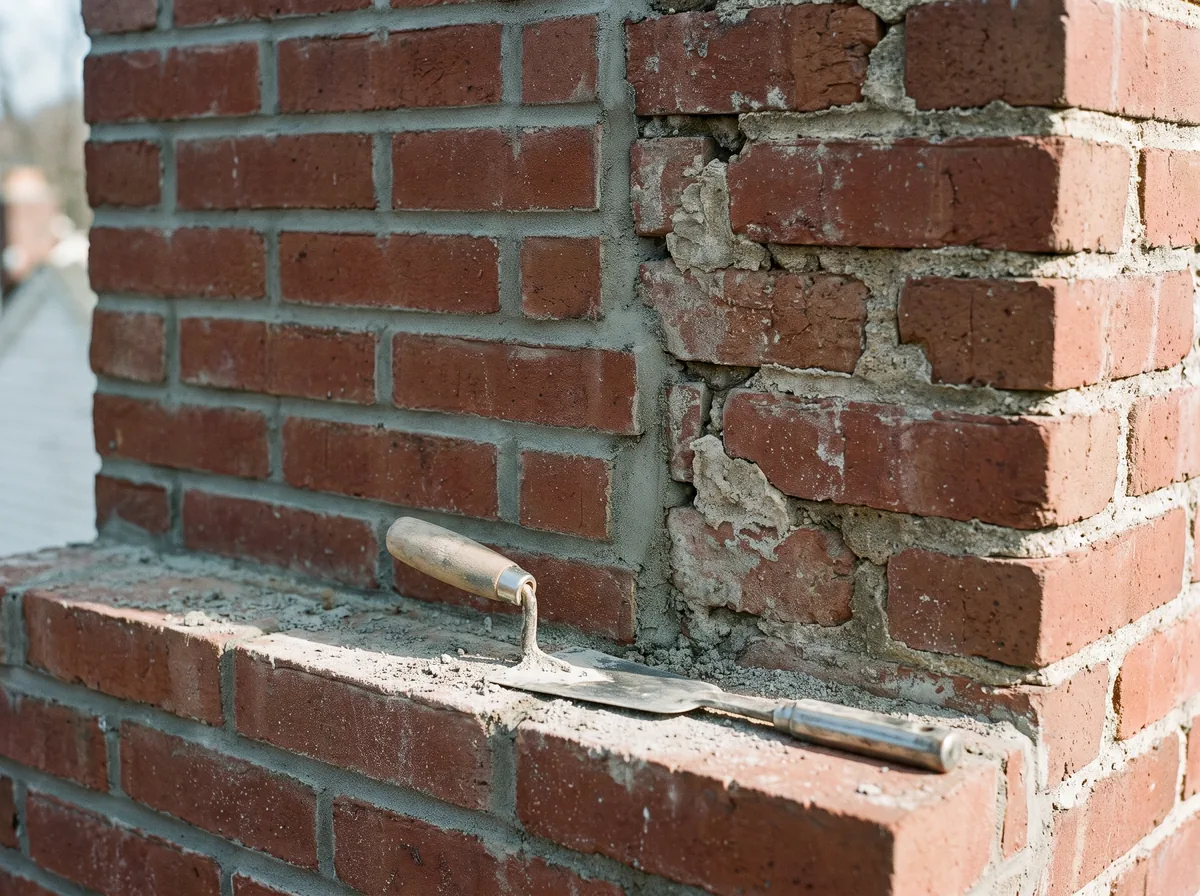
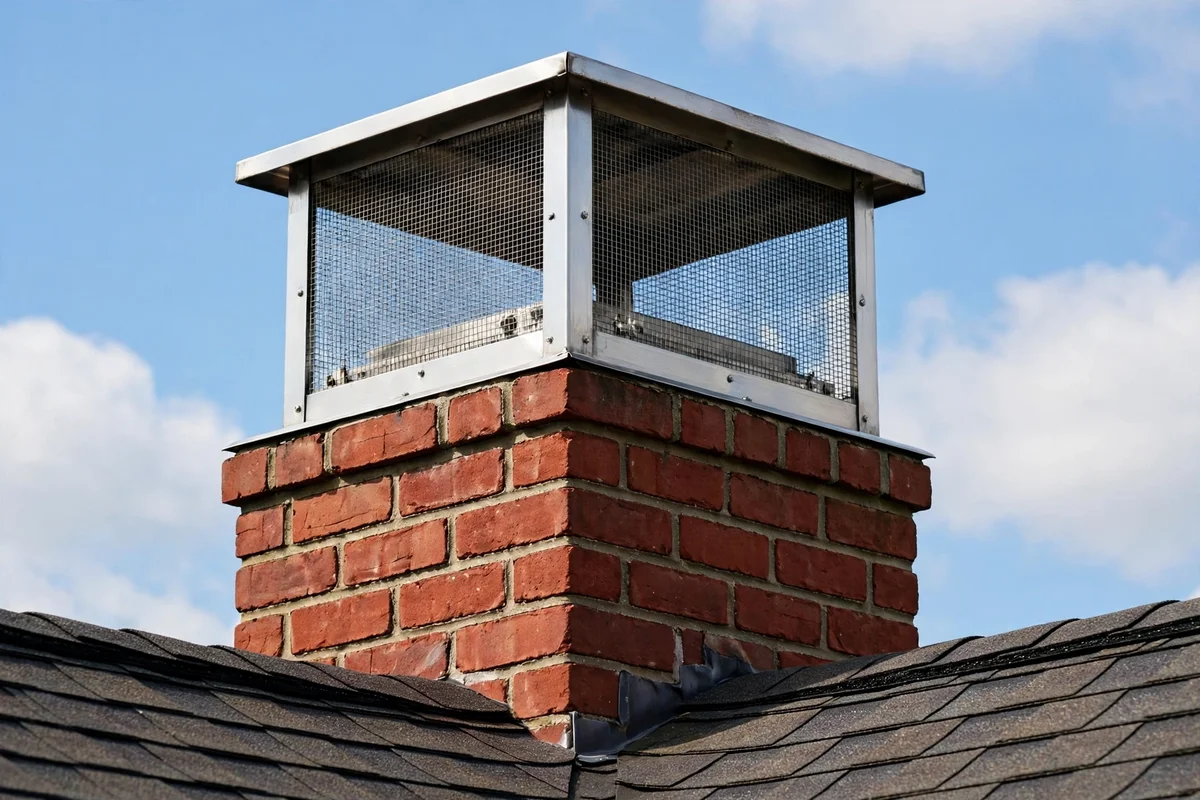
The inspection starts outside, at the top of the stack. The crown gets checked for cracks and for whether it sheds water or ponds it. The cap gets checked for rust, fit, and mesh condition. The flashing gets checked where the chimney meets the roof on all four sides. Then the brickwork: mortar joints for open or crumbling spots, brick faces for flaking or spalling, and the stack itself for any lean. Most of what fails on a South Shore chimney shows up in this exterior pass, and it is also the part a homeowner can partly check from the ground with binoculars. What the exterior cannot show is what is happening inside the flue, which is why the inspection does not stop there.
The firebox, damper, and smoke chamber
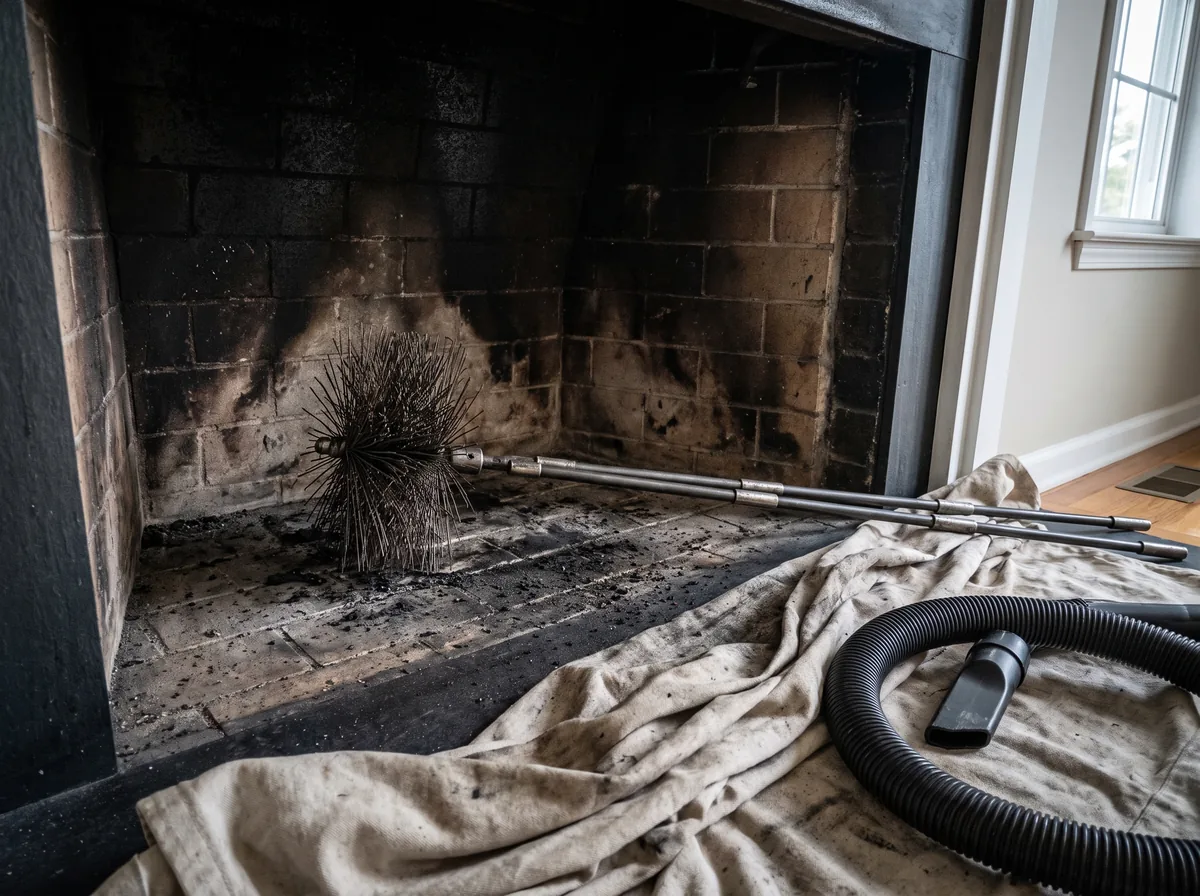
Inside, the inspection looks at the firebox floor and walls for cracks and heat damage, then at the damper: does it open fully, close flat, and seal, or is it warped, rusted, or caked with soot? Above the damper is the smoke chamber, the sloped area that funnels smoke from the firebox into the flue, and it gets checked for soot buildup and cracked surfaces. Problems here show up as smoke smell in the room, a weak draft, or a fireplace that smokes when it is lit. A damper that will not seal is part of what a caps and dampers check covers.
The flue: soot, creosote, and obstructions
The flue gets a visual check from below with a light, and the question is always the same: what stage is the creosote at, and is anything in the way? Flaky soot is normal and comes off with a sweep. Hard, shiny flakes mean the flue has been running cool and needs a thorough cleaning. A tarry glaze means the creosote has reached the stage a brush will not remove, and the flue tiles underneath may already be damaged. Nests, leaves, and fallen tile are obstructions, and any of them is a reason to stop using the fireplace until the flue is clear. If the flue needs cleaning, that is what a chimney sweep is for, and the inspection tells you whether a sweep is routine or urgent.
The draft, and the house around it
A chimney does not work alone; it works with the house. The inspection includes a look at how the flue draws, and whether the house is fighting it. A chimney that is too short for its roofline, a flue crowded by a taller neighboring roof, or a house with strong exhaust fans can all pull air down the flue instead of up it. That shows up as a smoke smell when nothing is burning, or a fireplace that smokes on windy days. An inspection that only looks at the chimney and never asks about the house will miss the cause of a draft problem half the time, so expect questions about when the symptoms show up and what else was running.
What an inspection does not cover
Honesty about the limits matters as much as the checklist. A standard visual inspection cannot see inside the flue walls, so hidden cracks in the liner need a camera scan, which is a separate step. It cannot see damage behind finished walls or under the roof, and it does not cover the roof itself, the heating appliance, or the gas or oil burner. If the inspection finds something suspicious inside the flue, the next step is a camera scan, not a guess. And an inspection is a report, not a repair: it tells you what is wrong and what it will take to fix it, and the repair is a separate decision. If you want the full picture of the flue, ask about a chimney inspection that includes a camera look.
What to do tonight
Before the visit, write down what you have noticed: smells, stains, weak draft, noises from the flue, and when each one shows up. That list is the most useful thing you can hand over, because symptoms with a pattern point straight at the cause. Call (857) 403-9528 and describe what you are seeing, and we will tell you what kind of inspection fits.
Not sure what you're looking at?
Describe what you see — or can't safely reach — and we'll tell you what it likely is before anyone climbs on your roof.
Keep reading
Book an inspection before winter
Tell us what you are seeing and we will tell you what it is likely to be, what it will take to fix, and roughly what it should cost — before anyone climbs on your roof.
Prefer to talk it through? The phone is answered around the clock, by a person, including during storms.
We work across Quincy, Braintree, Weymouth, Hingham, Milton, Hull, Cohasset, Scituate, Norwell, Marshfield and the rest of the South Shore.
This site is protected by reCAPTCHA and the Google Privacy Policy and Terms of Service apply.