Seasonal guide
Nor'easter Season: What Your Chimney Faces Between November and March
Between November and March, a South Shore chimney does its hardest work of the year. Nor'easters drive rain sideways into the masonry, salt air works into every crack, and freeze-thaw cycles pry joints open a little more each time.
Winter on the South Shore is not one problem for a chimney. It is five problems arriving together, storm after storm, for five months. A chimney that enters November sound can still come out of March with new damage, and a chimney that enters November already weak will come out worse. Here is what the season actually does, and the checks that keep small damage from becoming a spring rebuild.
Wind-driven rain, storm after storm
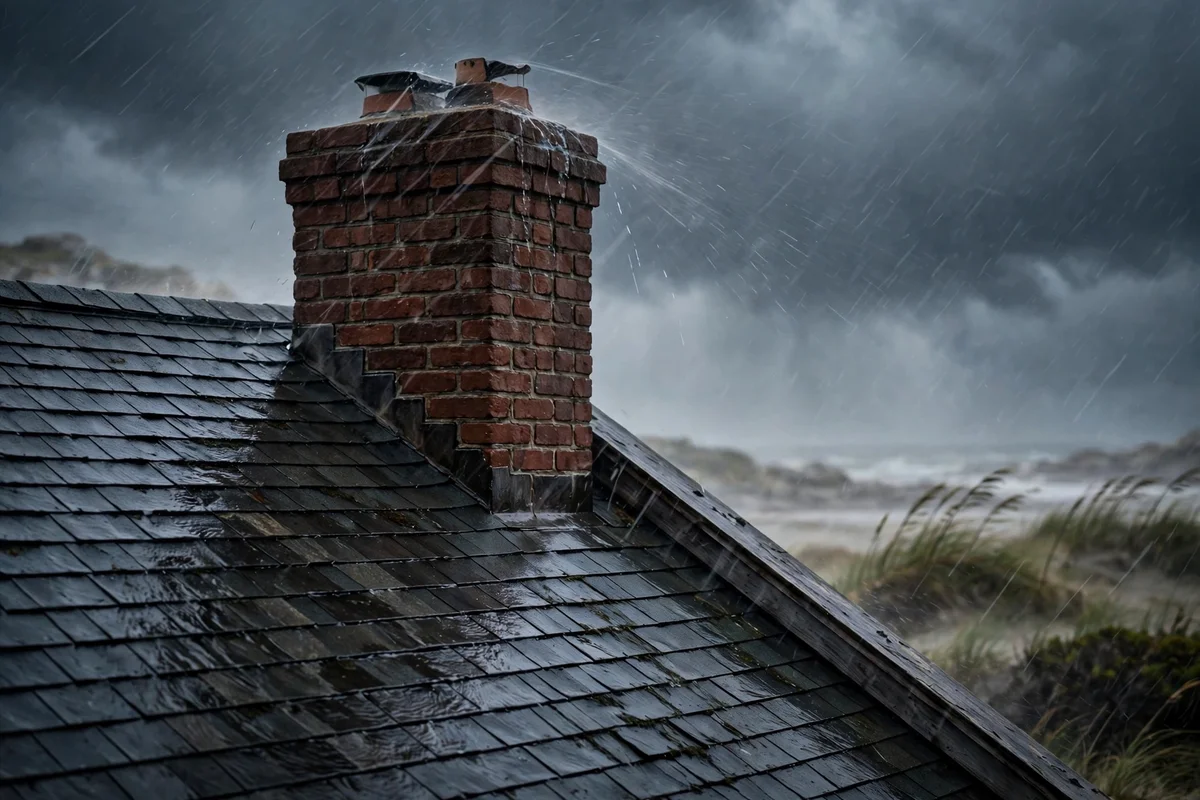
A nor'easter can push rain against one face of a chimney for twelve hours or more, and the season brings several of them. Each storm saturates the masonry a little deeper, and the chimney rarely dries out fully between storms in a damp coastal winter. That repeated soaking is what turns a hairline crack into an open one and a sound joint into a crumbling one. The damage is cumulative: the third storm of the season does more harm than the first, because it is hitting masonry that is already wet. After each big storm, the check from the ground is the same: flashing lines, cap position, and any new debris at the base. More on how leaks get traced after a storm.
Freeze-thaw cycles pry joints open
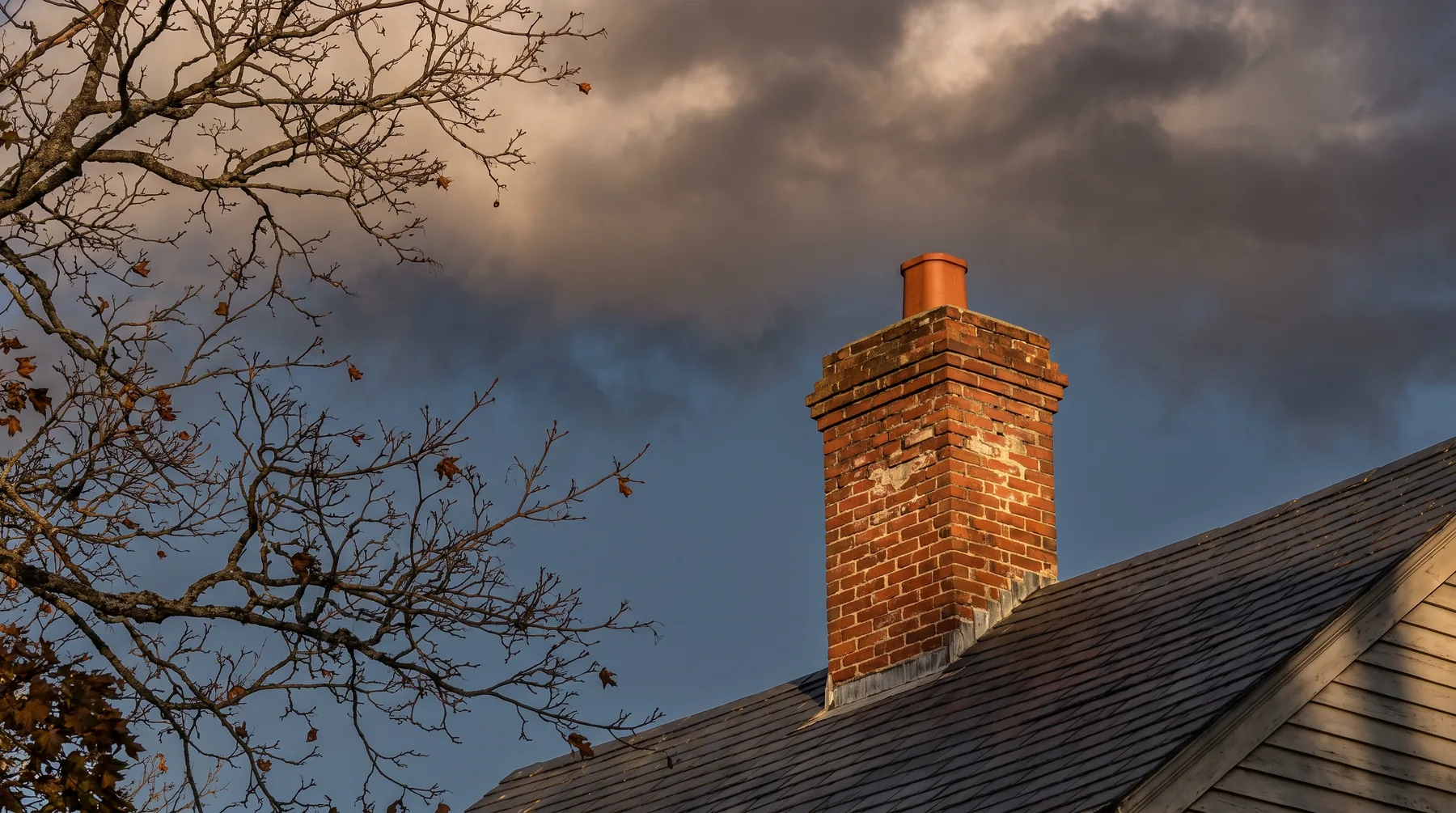
The South Shore sees dozens of freeze-thaw cycles every winter, and each one is a small wedge driven into the masonry. Water that soaked into a mortar joint during a storm freezes overnight, expands, and pushes the joint a fraction wider. The next storm soaks a little deeper, and the next freeze pushes a little harder. By March, joints that were merely open in November can be crumbling, and brick faces that were sound can start flaking off. That is why a chimney with open mortar in November is not a spring job. It is a before-the-freezes job, and the repair is usually repointing while the brick is still sound.
Salt air works into every crack
Coastal air carries salt, and salt is hard on masonry. It works into cracks and open joints, draws moisture in, and speeds up the decay of mortar and brick faces. Chimneys within a few miles of the water take this worse than inland ones, and the windward face takes it worst of all. Salt damage shows up as mortar that turns sandy and crumbles under a thumbnail, and brick faces that flake and pit. There is no way to keep salt air off a chimney, but sound mortar and a crown that sheds water give it far less to work with. Once the masonry is sound again, waterproofing slows the whole cycle down.
Heavy use, hot and cold
Heating season is when the flue works hardest, running hot during a fire and cooling down between fires, sometimes several times a day. That constant expansion and contraction stresses the flue tiles and the mortar, and it is also when creosote builds fastest, especially with slow, smoldering fires on mild nights. A flue that went into November with a heavy creosote coating comes out of March with a thicker one, and a weak draft only gets weaker as the coating grows. A mid-season sweep and inspection is worth it for any fireplace that gets daily use, not just the annual one.
Ice, snow, and the flashing line
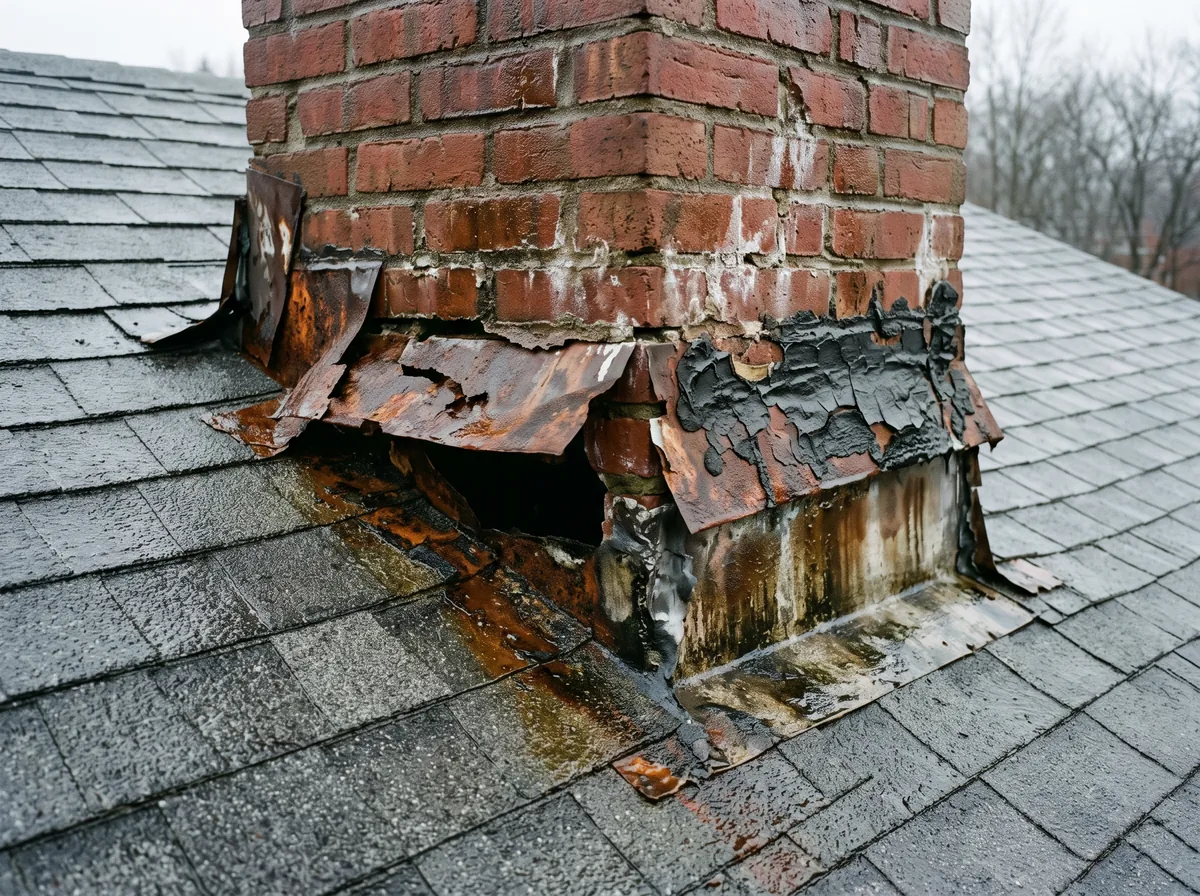
Snow that melts on a warm roof refreezes at the colder eaves and around the base of the chimney, and that ice can lift flashing and force water under it. Ice at the chimney base is easy to miss from the ground because it hides behind the stack, and the leak it causes often shows up inside days later, after the ice has already done its work. Keeping gutters clear helps, but the real defense is flashing that sits tight and a crown that sheds water instead of holding it. If a leak appears after a thaw rather than during a storm, ice at the base is one of the first things to check. See crown repair for what a sound crown looks like.
What to do tonight
After each big storm this winter, take five minutes from the ground: cap still centered, flashing lines still tight, no new mortar or brick fragments at the base, no new stains inside a day or two later. Note the date and the storm, and if anything changed, call (857) 403-9528 while the evidence is fresh. Winter damage is cheapest when it is caught in the same season it started.
Not sure what you're looking at?
Describe what you see — or can't safely reach — and we'll tell you what it likely is before anyone climbs on your roof.
Keep reading
Get winter-ready before the next storm
Tell us what you are seeing and we will tell you what it is likely to be, what it will take to fix, and roughly what it should cost — before anyone climbs on your roof.
Prefer to talk it through? The phone is answered around the clock, by a person, including during storms.
We work across Quincy, Braintree, Weymouth, Hingham, Milton, Hull, Cohasset, Scituate, Norwell, Marshfield and the rest of the South Shore.
This site is protected by reCAPTCHA and the Google Privacy Policy and Terms of Service apply.